
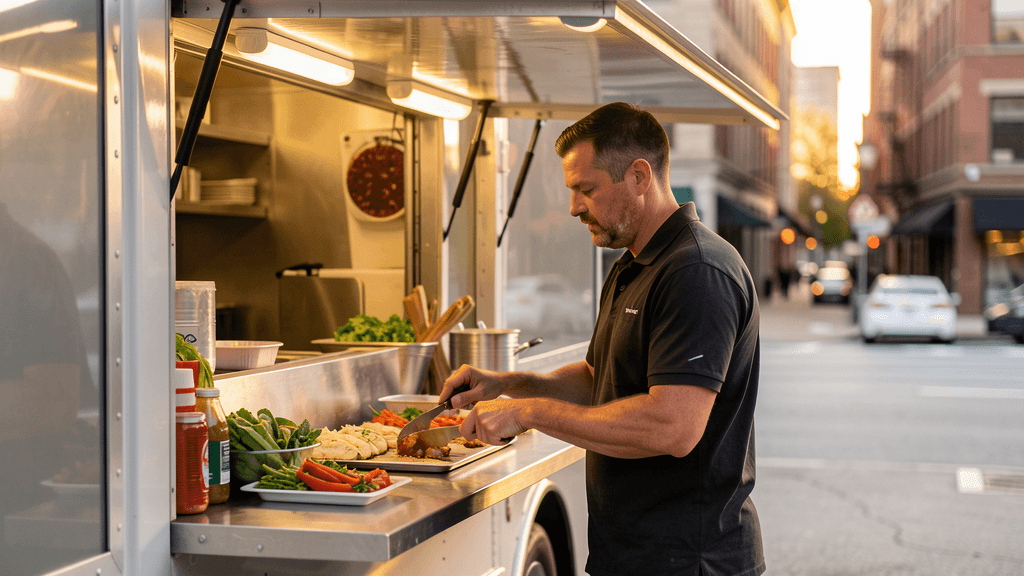
Food truck economics before financing
A food truck is a restaurant with wheels and a smaller menu, and the costs behave that way. The truck is only part of the number: the kitchen build-out (cooking equipment, refrigeration, water, electrical, ventilation), commissary and storage fees, permits and health inspections, branding, and initial inventory all land before the first service. Illustrative planning ranges: a used box truck at $40,000 to $80,000, a build-out at $20,000 to $40,000, and permitting, commissary, and startup inventory adding meaningfully on top. A new custom truck can pass $150,000. These are planning assumptions, not market averages, so verify every line with local quotes. The business plan should show what each dollar buys and when it pays back.
The cash cycle that breaks food trucks
Revenue arrives in spikes, not weekly deposits. Event weeks, festivals, lunch corridors, and seasonal demand concentrate income into bursts, while fixed costs (truck payments, commissary, insurance, permits, labor) land on schedule. Weather and permit windows shift the spikes. A truck that is profitable across a season can still hit a cash gap in a slow stretch, which is a timing problem, not a profitability problem. Model the slowest consecutive weeks, not the average week, before sizing any financing.
What you qualify on
Funders underwrite deposits and consistency first for working capital, and the asset for secured options. Revenue-based and factoring-style products weigh monthly business deposits, time in business (often 6 or more months), an active business checking account, no current default with another funder, and owner credit commonly in the 600 to 680 range. Equipment and vehicle financing leans on the truck's value and your credit. Bank lines and SBA products carry higher bars: stronger credit, more history, and full financials. No lender promises approval; the file decides.
Financing the truck and build-out
The truck, trailer, or build-out is a tangible asset, which is what equipment financing is built for. The asset secures the loan, terms track its useful life, and you keep cash in the business instead of draining it on one purchase. Used and specialized builds are financeable when the condition and valuation support the term. Leasing is an alternative for trailers and equipment that dates quickly. Do not use short-term working capital to buy a long-lived asset; match the term to the life of the thing.
Working capital between events
The gap between a strong event weekend and the next cycle is a working capital problem, not an equipment problem. A business line of credit covers recurring, unpredictable gaps because you draw only what you need and repay as event revenue lands. A revenue-based advance can bridge a specific deadline, a permit window, or a commissary deposit at a higher cost, with repayment that flexes with revenue. Compare total dollars at your expected repayment date before choosing, and do not stack multiple daily-repayment positions.
Compare structures before you sign
Ask each provider for the same set: the amount funded, total repayment, payment amount and frequency, any fees deducted, and the APR-equivalent. Then stress the slow case: what happens if a permit window shifts or a season underperforms? Confirm prepayment policy and whether payments flex with revenue. A reconciled comparison is the difference between a good fit and an expensive one. When the need is documented and the truck is on a path, Commera Finance can review the file and match it to the structure with the lowest total cost across our lending partners. We are a business capital advisor, not a direct lender.
Sources